Eight words
Waterlands makes up eight nouns and then puts them on screen in capitals as if you already knew them. Here is each one, in a line, with a link to where it actually appears.
- Step 1 · Noun
Step 1 of 8. Spot
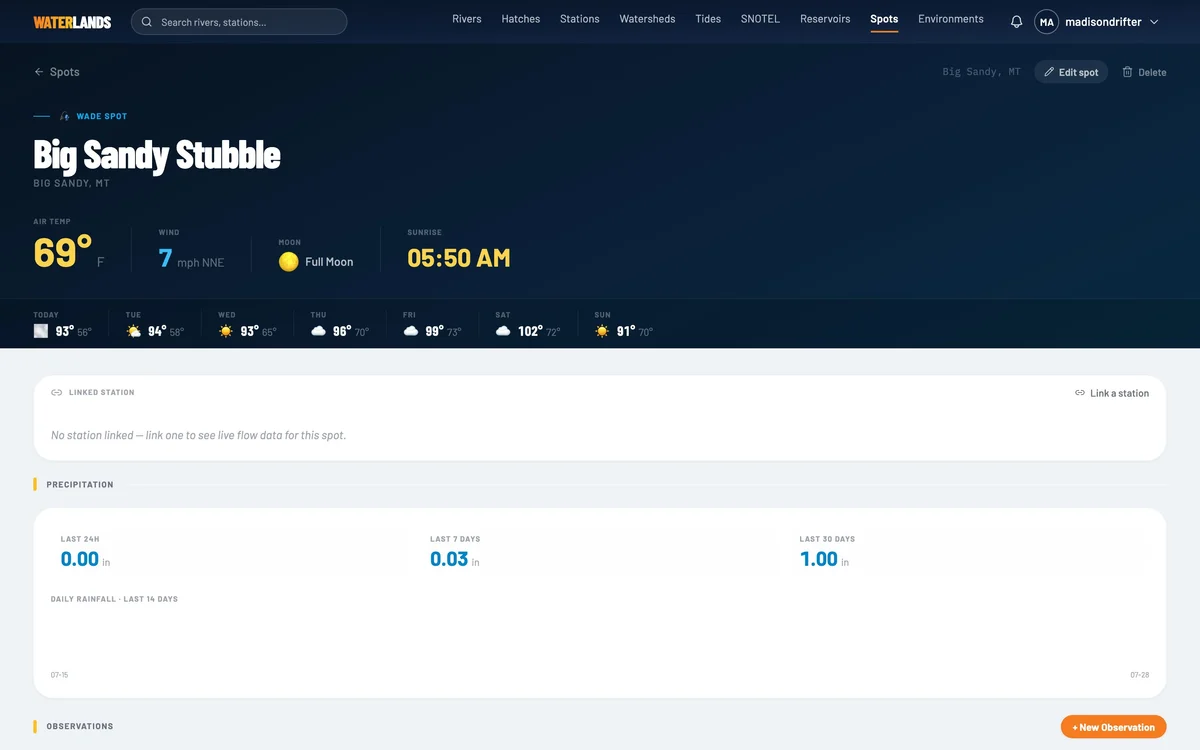
A pin you drop on the exact water you fish or hunt, so conditions follow that place instead of the nearest gauge.
A Spot can be a run, a bend, a blind, a boat ramp or a field edge. It is private, it is yours, and it is the anchor everything else hangs off.
- Step 2 · Noun
Step 2 of 8. Station
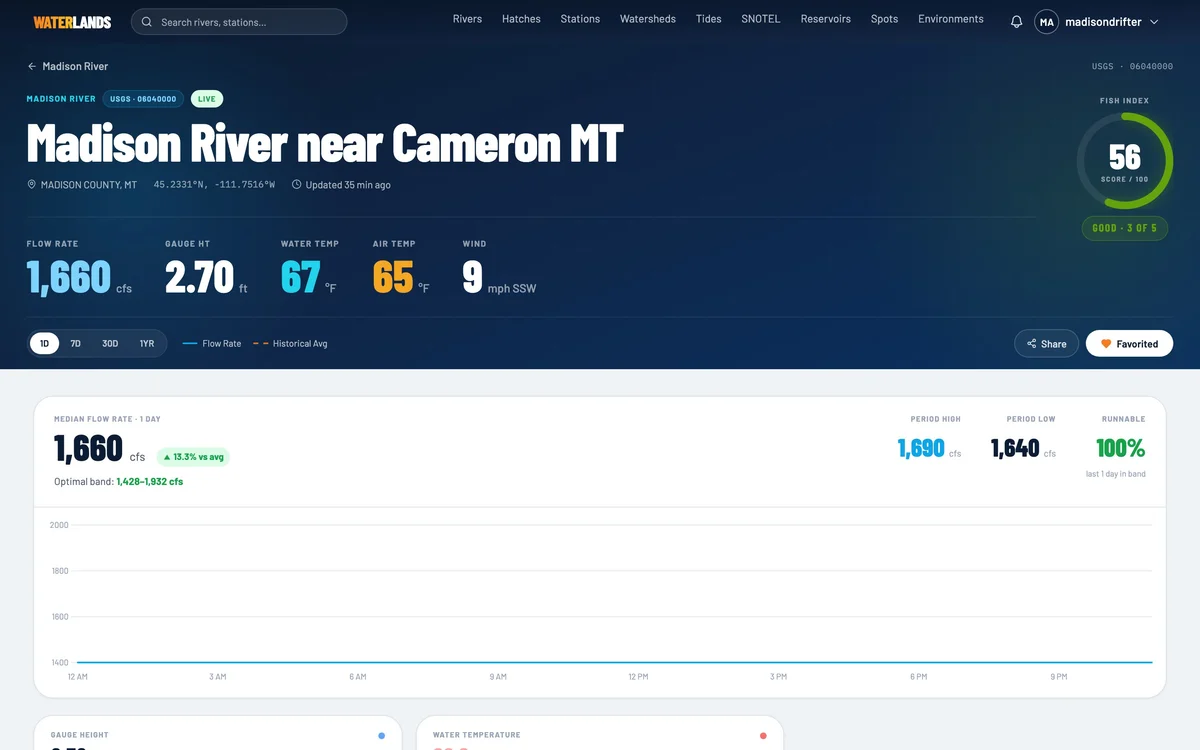
A public gauge — USGS, USACE or NOAA — whose flow, stage, temperature or tide readings Waterlands tracks for you.
Stations are not ours. They are federal and state instruments, cited by name on every widget that reads one, and they go offline sometimes; when one does, the app says so rather than carrying the last number forward.
- Step 3 · Noun
Step 3 of 8. Read
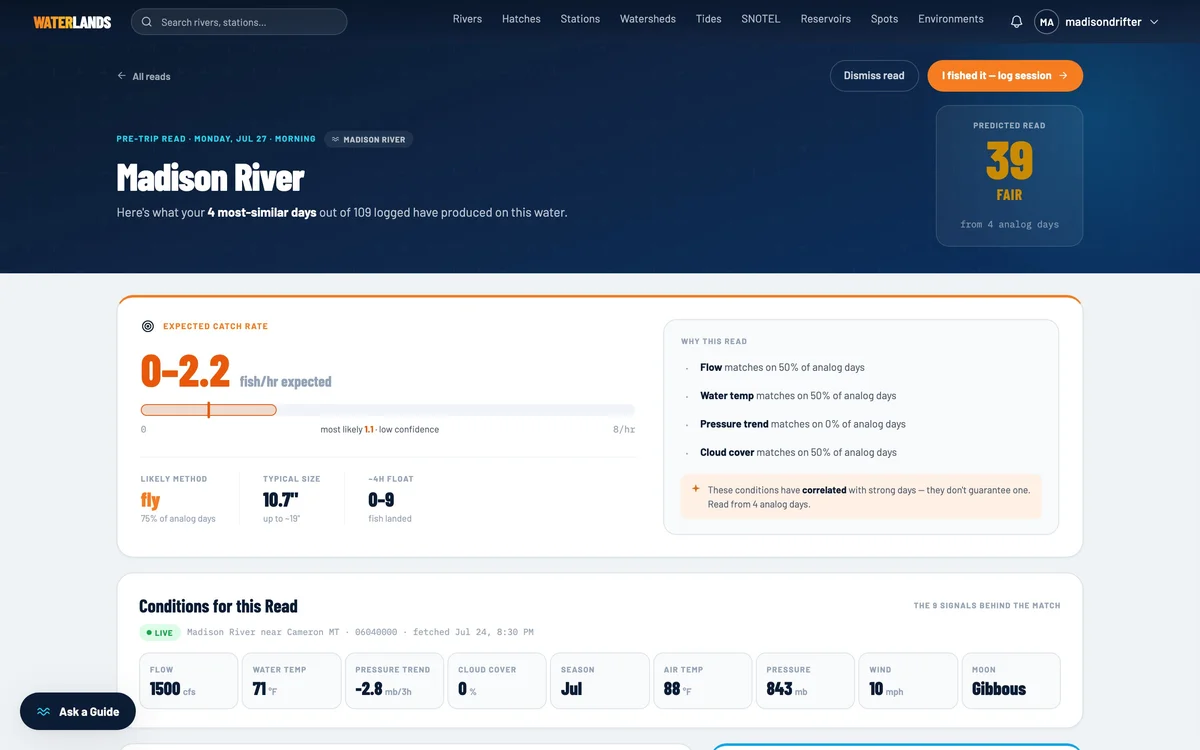
Your plan for a trip you have not taken yet: what you expect the water, weather and fish to do before you go.
A Read is written in advance and never edited afterwards. That is the point — it is the prediction half of the pair, and a prediction you can revise once you know the answer is worth nothing.
- Step 4 · Noun
Step 4 of 8. Session
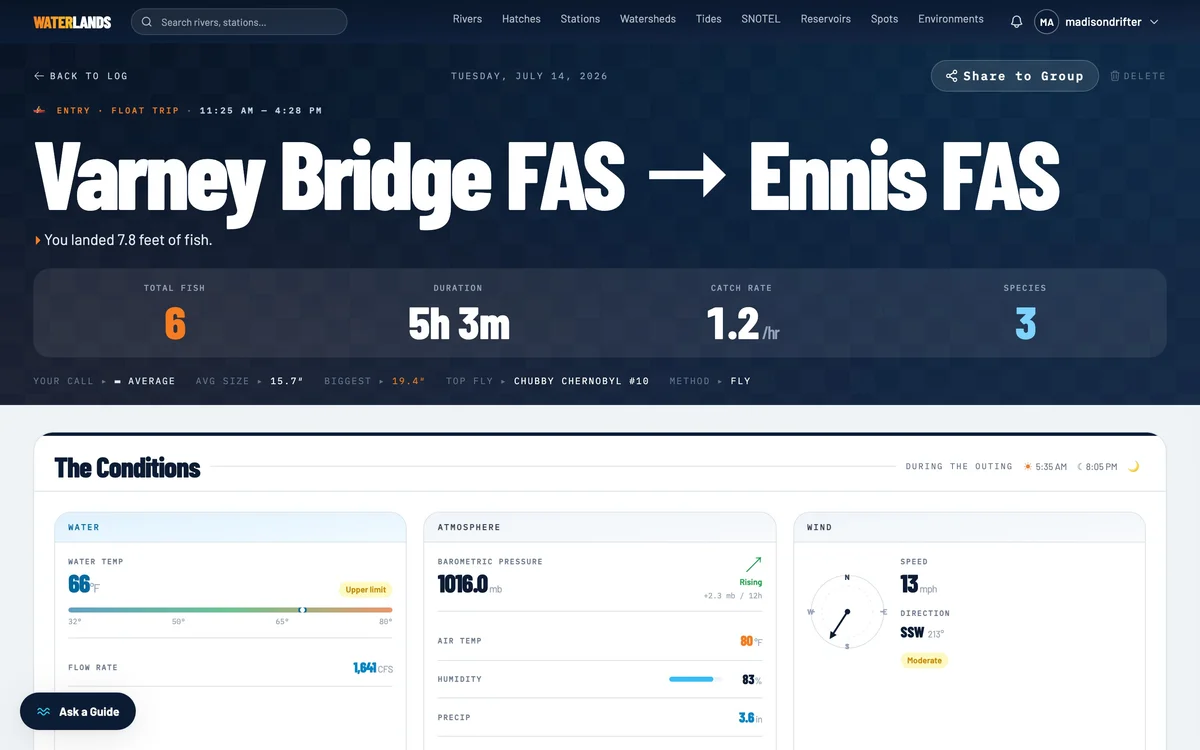
One logged trip — where you went, how long you were out, and what you caught or shot.
Sessions are the only thing in Waterlands that is genuinely yours rather than derived: every score, rank and correlation in the app is computed from them.
- Step 5 · Noun
Step 5 of 8. Debrief
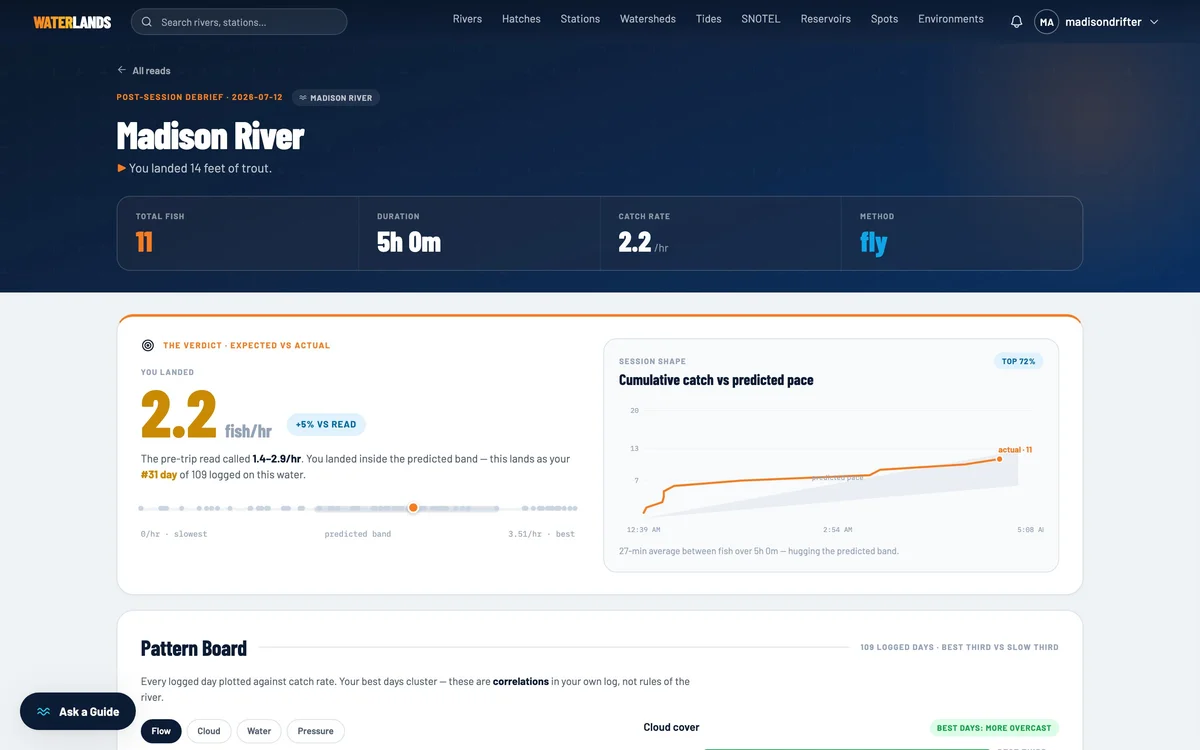
The note that closes the loop after a session: what actually happened, next to what you expected.
The Debrief is where a Read gets graded. Over a season the gap between the two is the most useful number in the app, because it is the only one measuring you rather than the water.
- Step 6 · Noun
Step 6 of 8. Code
A score for one day and one place, built from your own logged trips — Bite Code for fish, Flight Code for waterfowl, Flush Code for upland.
The three are the same engine reading different factors. A Code is not a crowd average and not a forecast bought from anyone: with no sessions behind it, it says so instead of guessing.
Bite CodeFlight CodeFlush Code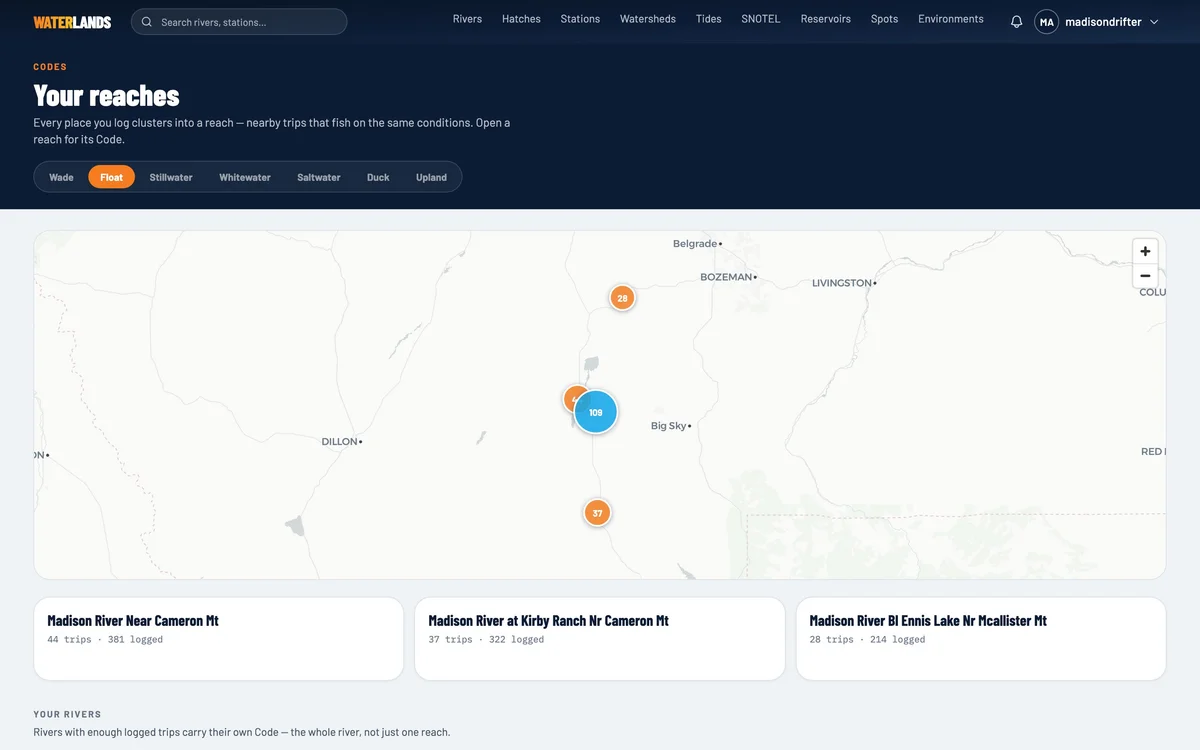
- Step 7 · Noun
Step 7 of 8. Environment
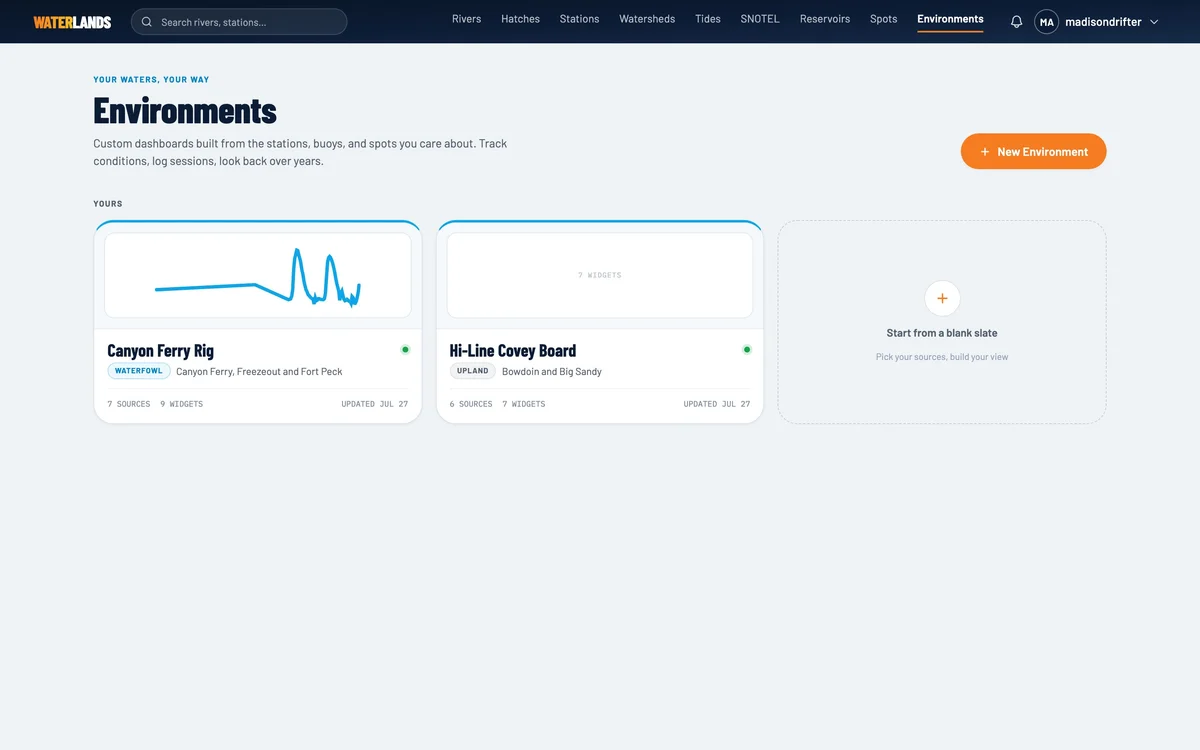
A dashboard you assemble from widgets, so the gauges and data you actually care about sit on one screen.
An Environment is the aggregation of everything else — Spots, Stations, Codes, forecasts and public feeds — arranged the way you think about your season rather than the way we do.
- Step 8 · Noun
Step 8 of 8. Alert
A rule that watches conditions for you and tells you the moment they cross the line you set.
Alerts can be one condition or several at once — flow under a number and the wind out of the north and the pressure falling. They fire on the data, not on a schedule.
