Hunt where the birds moved
Crop progress and harvest as habitat signal. Scenting conditions for the nose. Snow pushes for late season. Waterlands reads the ground the way you do.
- Step 1 · The pitch
Step 1 of 9. Read the ground like a bird dog
Coveys move on cover, scent, and snow. Waterlands tracks crop progress and harvest as a habitat signal, scores scenting conditions hour by hour, and flags the pushes that move late-season birds.
All of it measured against your own logged hunts, on the ground you actually run.
→NextIt starts with one piece of cover.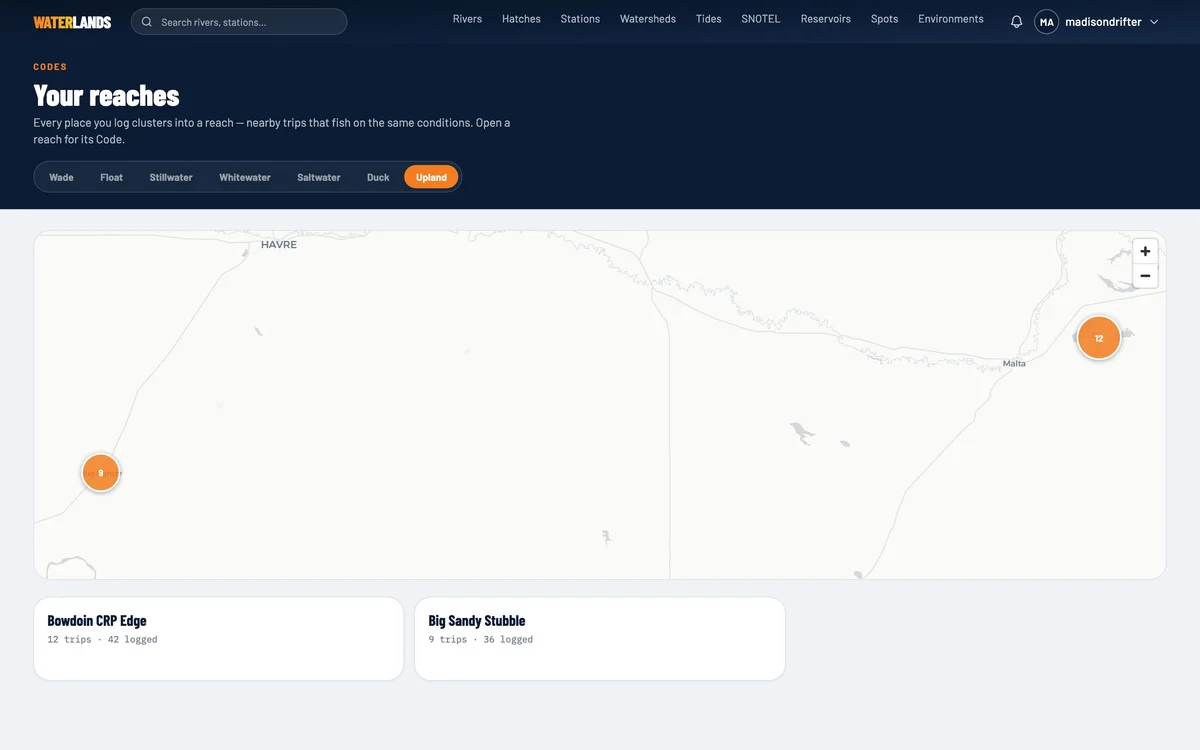
- 1Your Flush Code, built from your own hunts
- Step 2 · Start here
Step 2 of 9. Pin the cover
The CRP edge. The coulee that always holds huns. The stubble you walk after the combines come through.
Save it with its cover type and every hunt you run there stacks into one place — which is what turns a season of walking into a map worth having.
TipCovey locations never leave your account. They are not shared, aggregated, or sold.→NextThen watch what the ground is doing.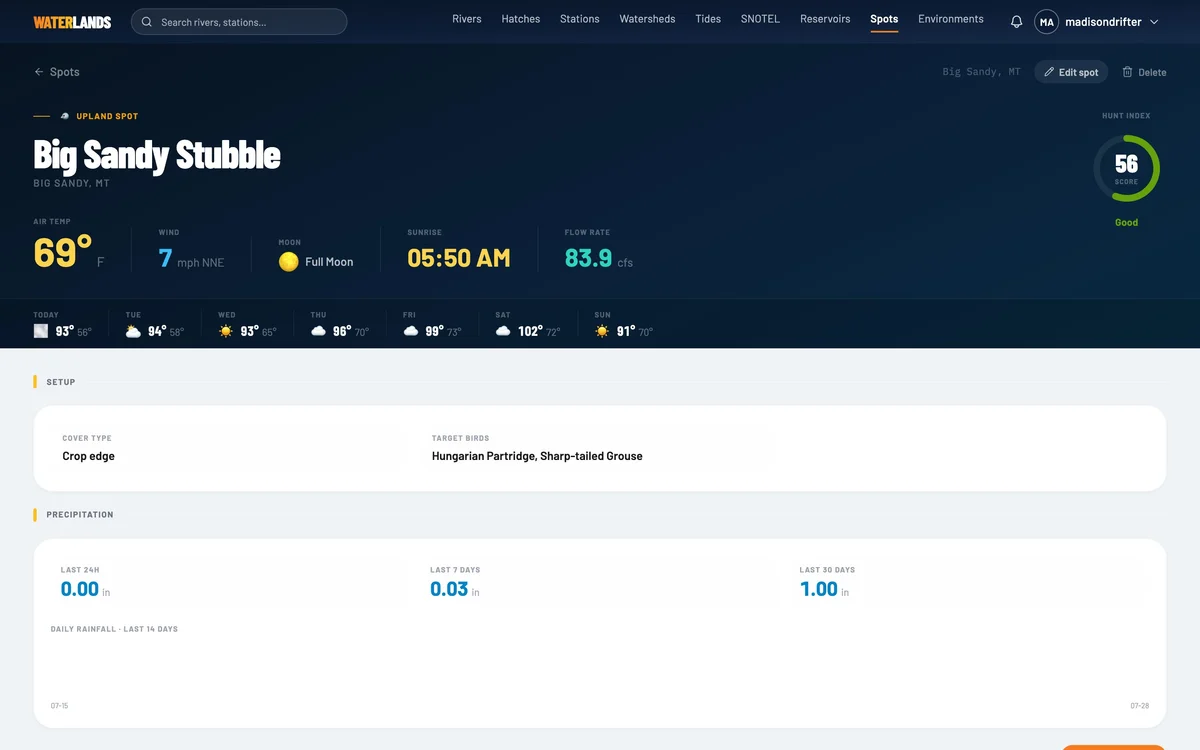
- Step 3 · The inputs
Step 3 of 9. Crops, drought, and the nose
Harvest progress tells you when cover disappears and birds relocate. Drought tells you what the hatch had to work with. Temperature and humidity tell you what the dog's nose will actually be able to do.
Upland does not have a gauge to read, so Waterlands reads the ground instead.
Crop progressDrought (USDM)Scent IndexSnow Push→NextLogged hunts against watched ground is where the pattern starts.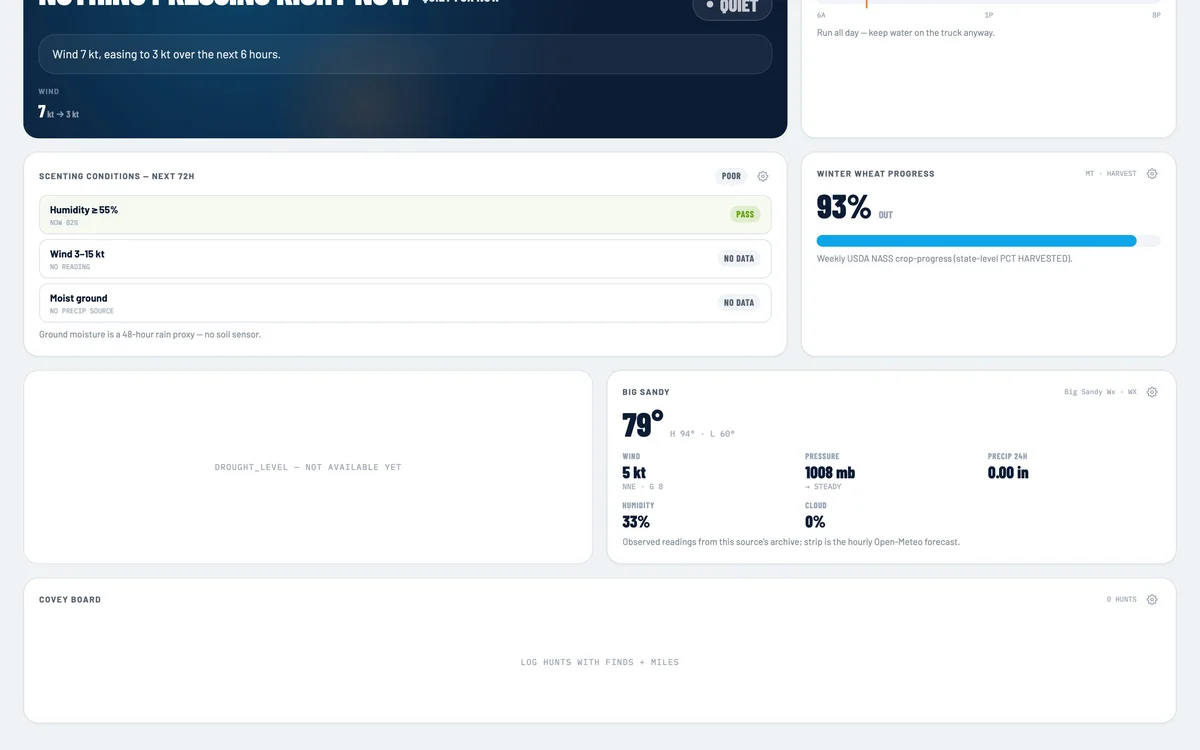
- Step 4 · Before you go
Step 4 of 9. Take a Read
The upland Read scores scenting conditions, bird-holding cover, and pressure for your date and your ground, against the hunts you have already logged.
Like the waterfowl Read it does not print a bird count. It tells you what the conditions look like and how much history it has to say it with.
→NextThen go run it.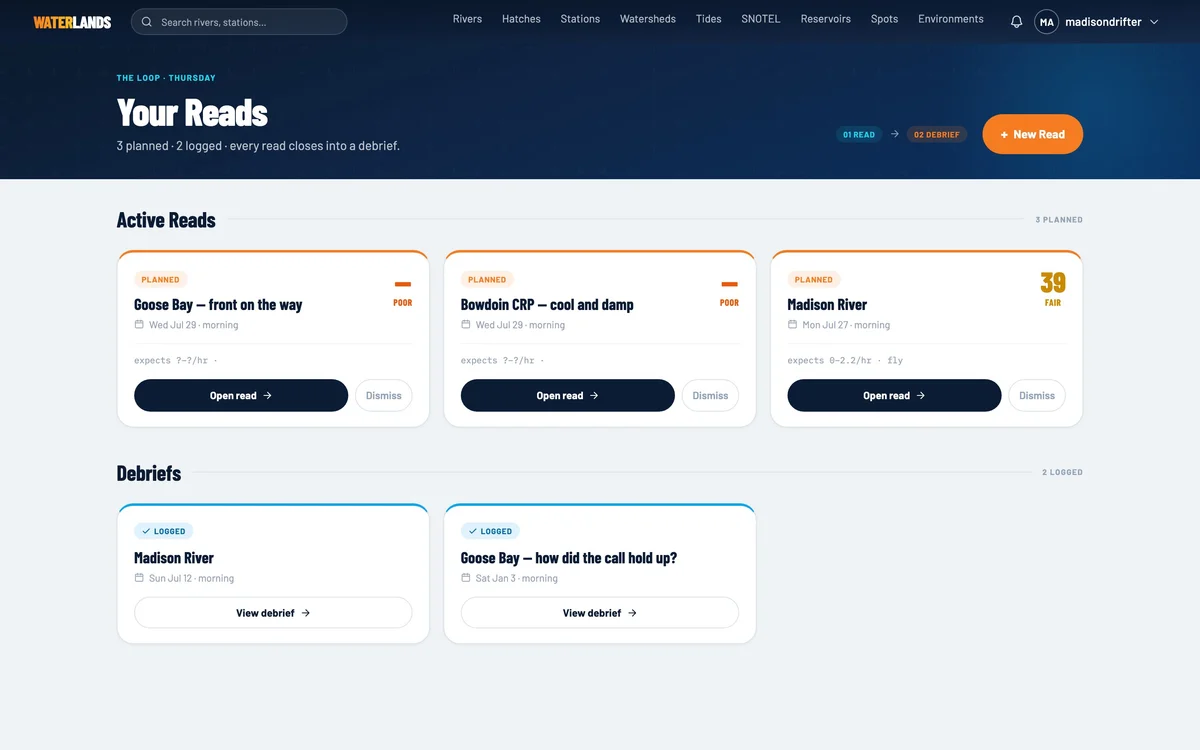
- Step 5 · The habit
Step 5 of 9. Log the run, rate the cover
Flushes, points, birds, and miles. Waterlands snapshots temperature, humidity, wind, and crop stage at that hour.
A season of that is a record of which cover actually produced, in which conditions — instead of a vague sense that the north end was better this year.
→NextEvery logged hunt feeds the Covey Board and your Code.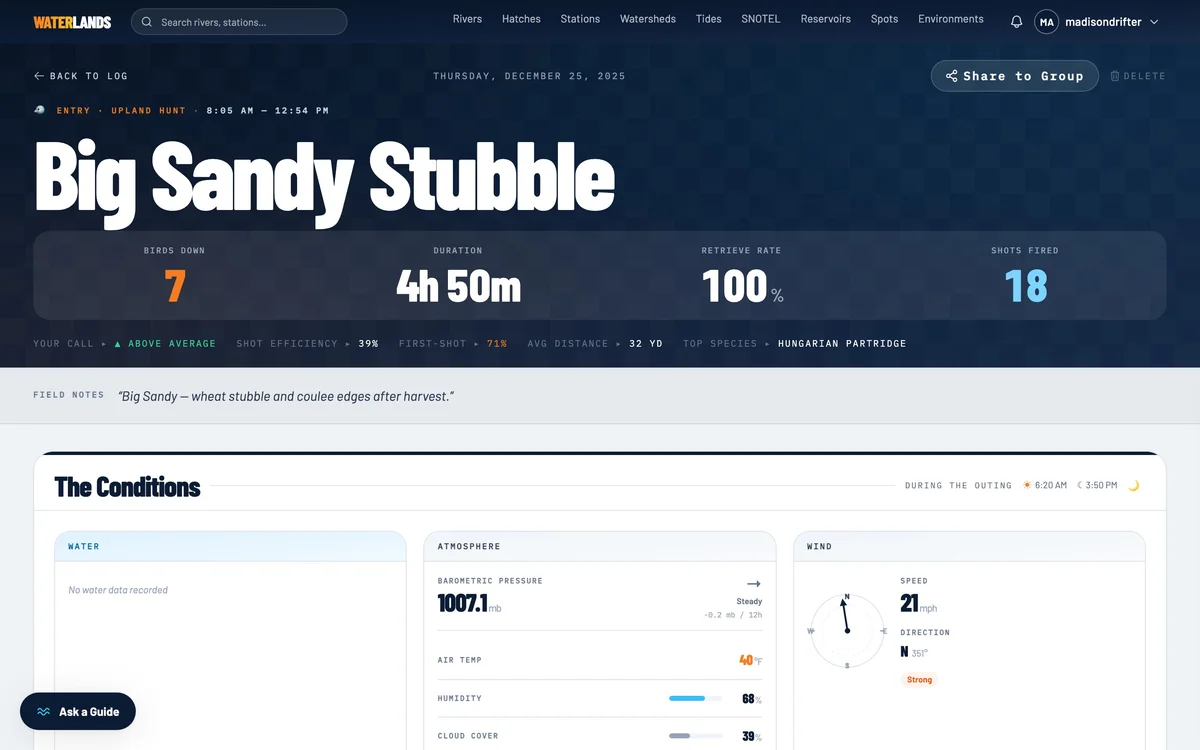
- Step 6 · After you go
Step 6 of 9. File a Debrief
Finds per hour against the call. Where the day ranked. What the conditions were doing when it went well.
Thirty seconds, and the next Read is better for it.
→NextEnough of these and your ground carries a signature.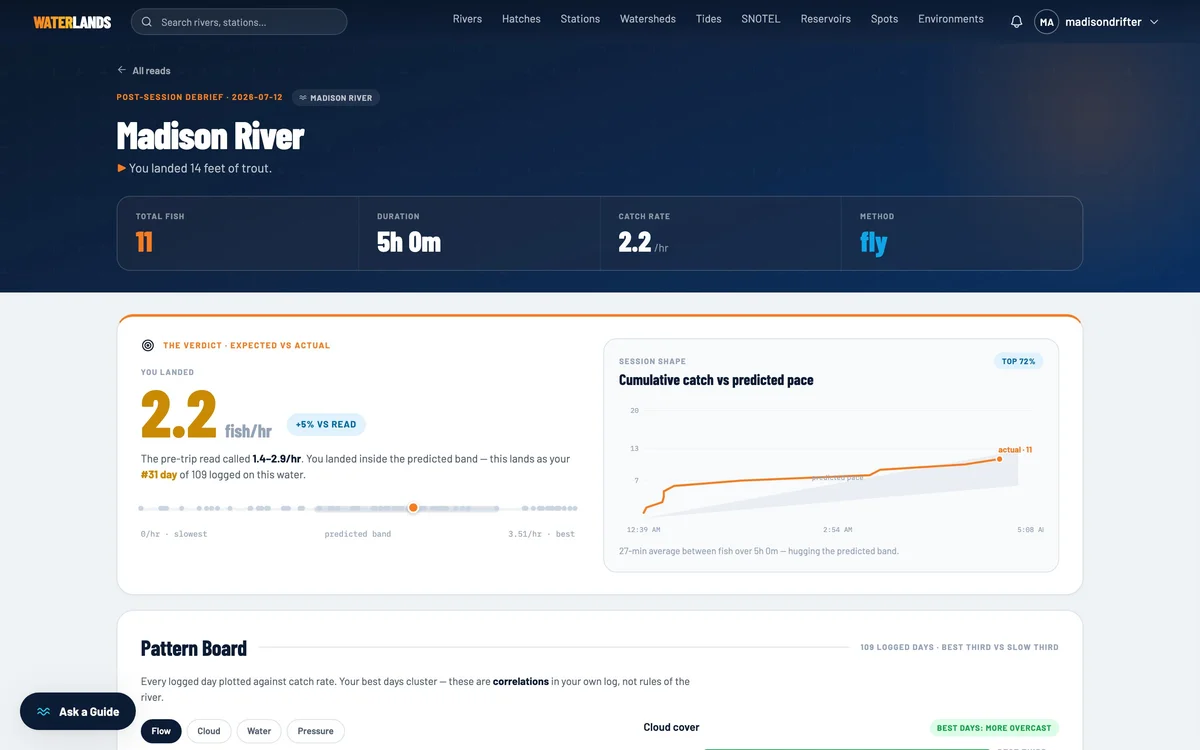
- Step 7 · The payoff
Step 7 of 9. Your ground gets a number
A Flush Code for the places you run, with the signature behind your good days — scenting hours, cover stage, fresh snow.
And a Covey Board that maps every covey you have moved, season over season. That map is the most valuable thing in the app, and it is yours alone.
→NextThe dogs come first, though.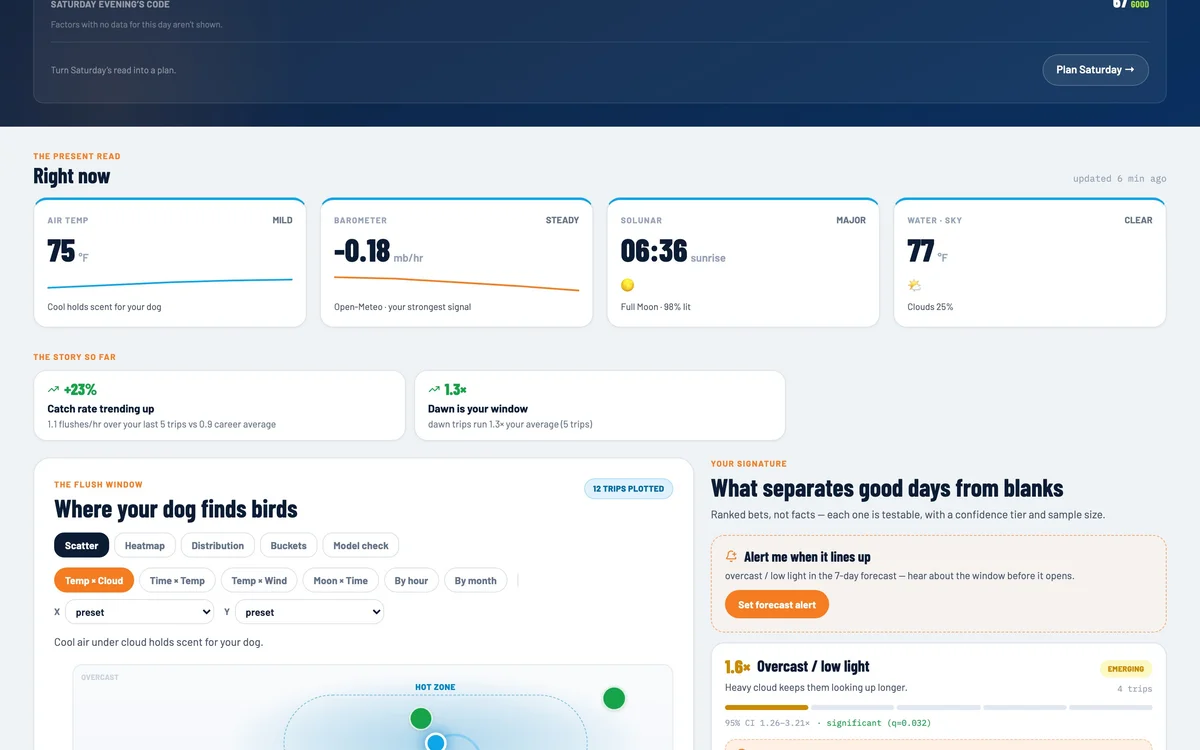
- 1Covey Board — private to your account
- Step 8 · The aggregation
Step 8 of 9. A board built for birds
Everything on one screen: your cover, the scenting forecast, harvest progress, drought, and Dog Heat Watch flagging the hours that are actually safe to run.
This is what the rest of the system is for. Every spot, hunt, and Code you build feeds a board that tells you where to be and when to load the dogs.
Covey BoardCrop ProgressDog Heat WatchFlight TrackerScent IndexSnow Push→NextA board is what your alerts watch.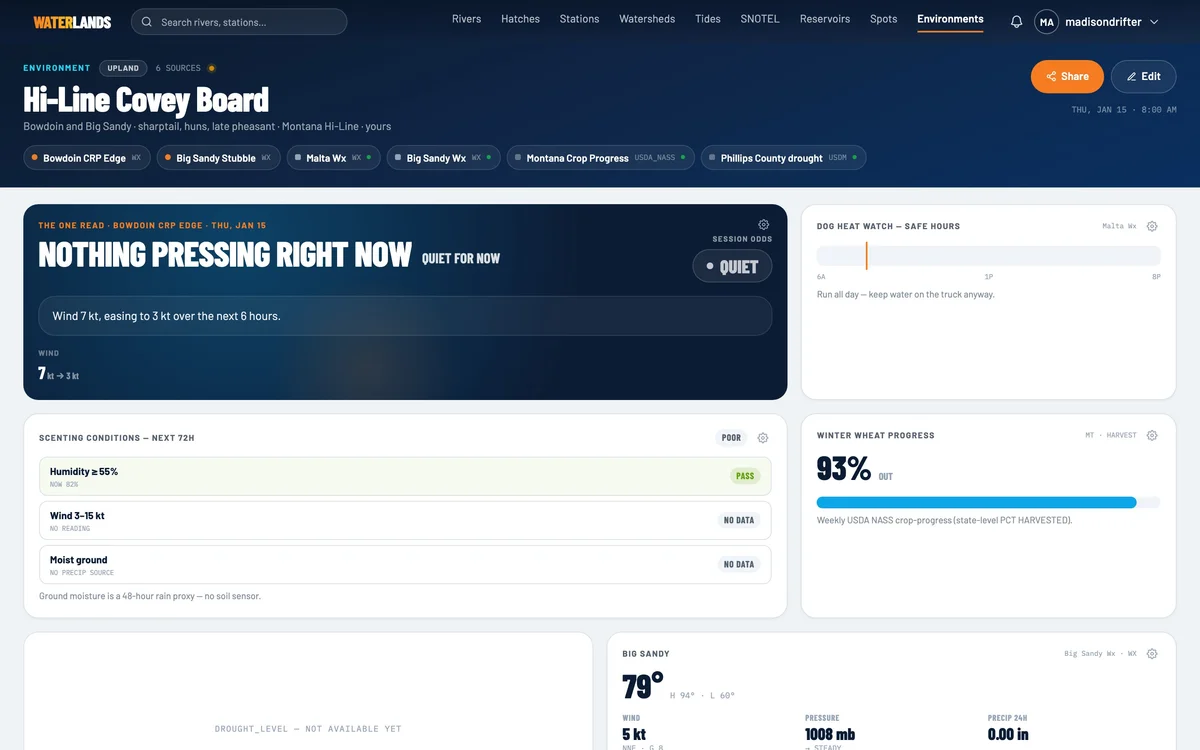
- Step 9 · The trigger
Step 9 of 9. Alerts on heat and cover change
"Tell me when morning temps drop under forty-five and the wheat comes out." Heat-safety windows for the dogs, harvest progress, and the snow pushes that relocate late-season birds.
The ground tells you when it changed.
Season over seasonAlso in the bag
Heat-safety and harvest alerts. Observations for what you saw. Groups to run the season with the people you hunt with.
For brands and dog people
Your customers hunt on conditions. Meet them there.
Bird-dog and kennel brands reach upland hunters at the moment that matters: the night before, when the ground says go.
The audience, in season
Hunters checking scenting conditions and snow pushes the night before — not doomscrolling in July.
Dog safety is brand safety
Dog Heat Watch is the feature their kennel talks about. Put your name next to it.
One URL to evaluate
This page. No login, no deck, sixty seconds of scrolling.