
The lake tells you first
Waterlands watches drawdown, freeze-up, cold fronts and flyway timing over your water, then scores your mornings from the hunts you log.
- Step 1 · The pitch
Step 1 of 9. Drawdown, freeze-up, fronts
Ducks move on water and weather. The pool dropping, the freeze line marching south, the next hard front coming off the prairie.
Waterlands watches all three over your exact water and scores your mornings from the hunts you have logged — not from a rumor mill and not from a generic almanac.
→NextIt starts with one blind.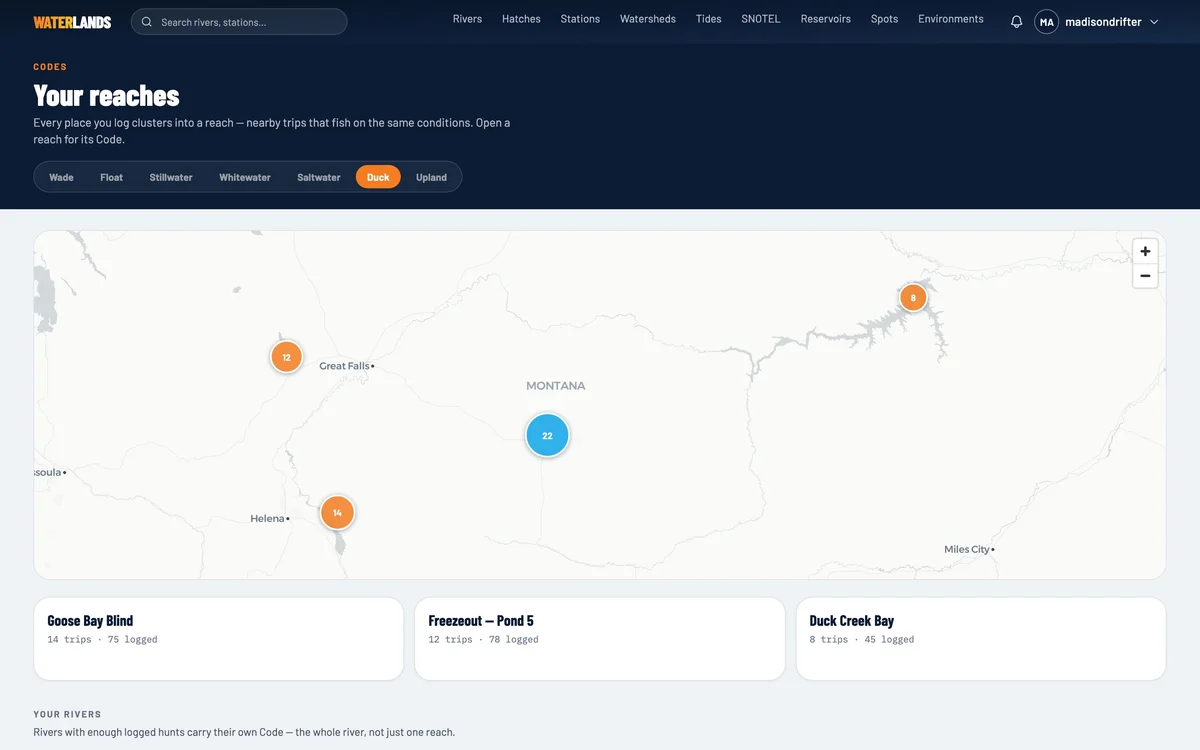
- 1Your Flight Code, built from your own hunts
- Step 2 · Start here
Step 2 of 9. Pin the blind
The layout in the flooded field. The A-frame on the marsh pond. The boat blind out on the big water.
Save each one with its habitat and setup, and every hunt you log there stacks into the same place. Rest history, wind exposure, and what actually finished all key off the spot.
TipPin every hole you hunt, not just the good ones. Rest Rotation only works if it knows where you did not go.→NextThen watch what the water is doing.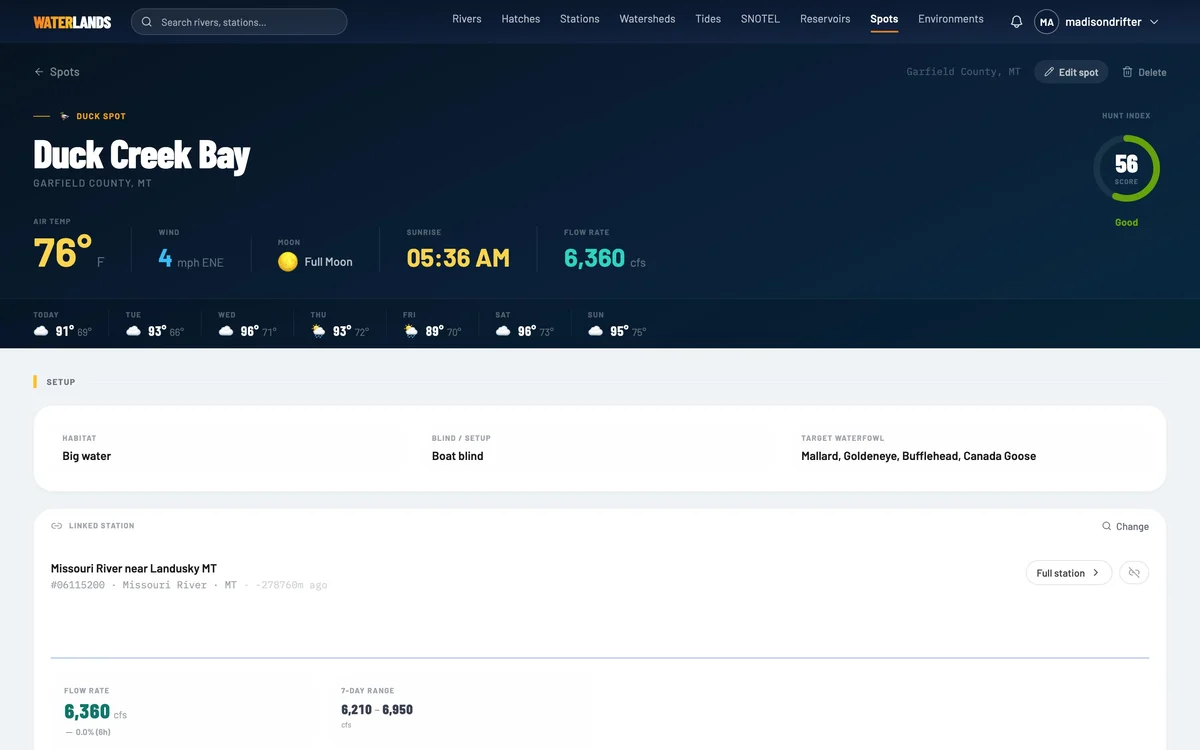
- Step 3 · The inputs
Step 3 of 9. Watch the pool, not the rumor
Reservoir gauges give you pool elevation against top of conservation — the number that tells you whether the grass is flooded or high and dry.
Some water has no gauge at all. Freezeout does not, and Waterlands will not invent one. What it will do there is track the freeze line off the forecast, which needs nothing but coordinates.
Pool elevationFreeze-Up WatchSeverity indexFront timing→NextLogged mornings against watched water is where the pattern starts.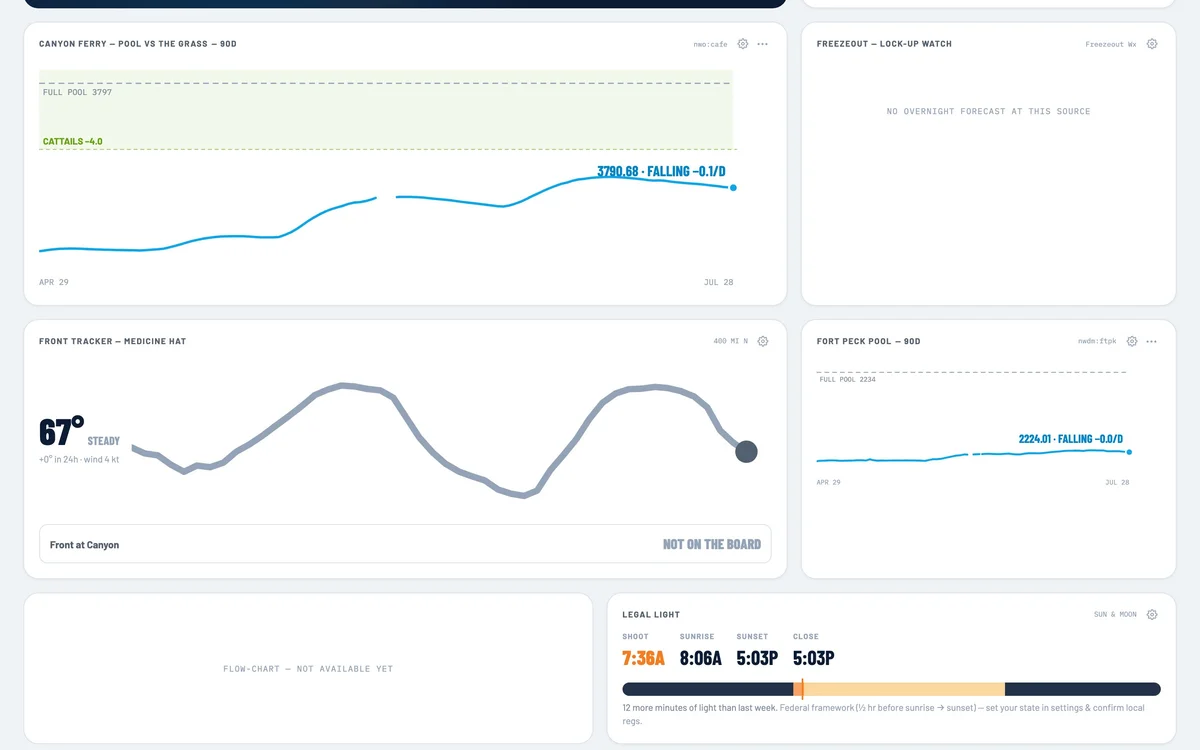
- Step 4 · Before you go
Step 4 of 9. Take a Read
The waterfowl Read asks waterfowl questions. How old is the front. Is the wind holding. What did the freeze line do overnight.
It scores tomorrow morning against the most similar mornings in your log. It does not print a bird count — nobody can honestly predict that, so it does not pretend to.
→NextThen hunt it, and log what the birds actually did.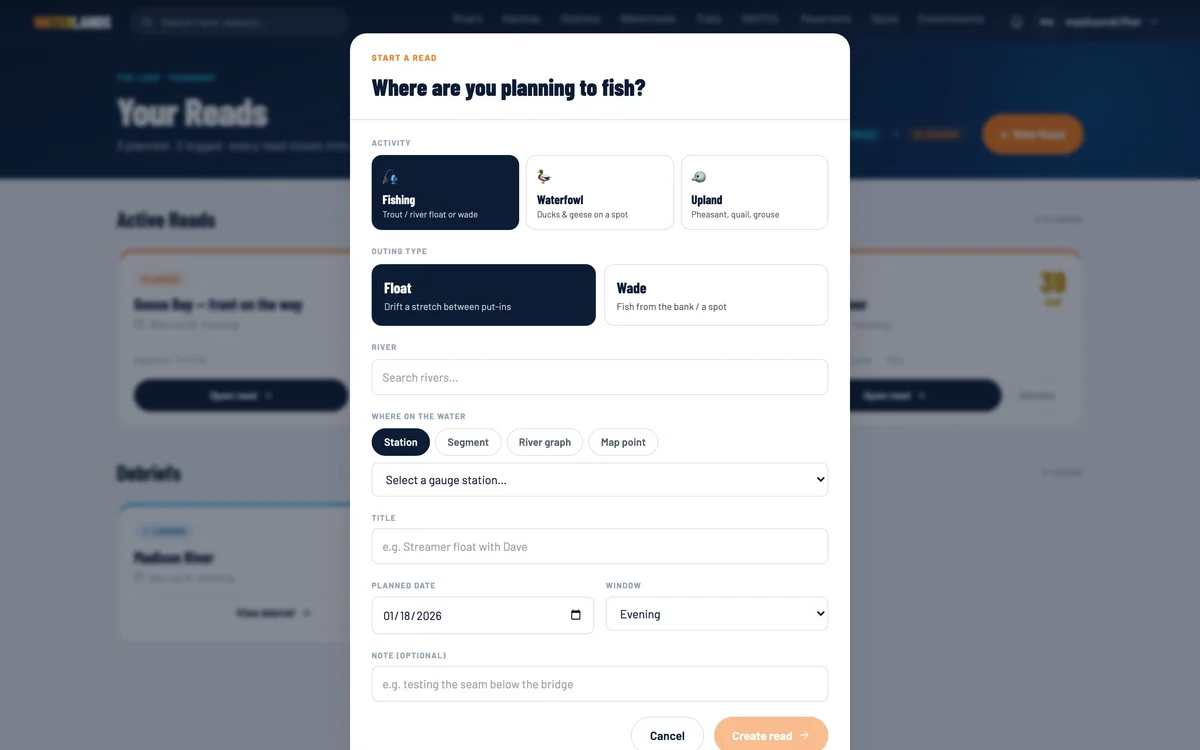
- Step 5 · The habit
Step 5 of 9. Log the hunt from the blind
Birds, blind, spread, and the shots that mattered. Waterlands snapshots lake level, front timing, wind, and severity at that hour automatically.
The notebook keeps itself, which means you still have it in March when you are trying to remember whether that late push was the cold or the water.
→NextEvery logged morning trains the Code.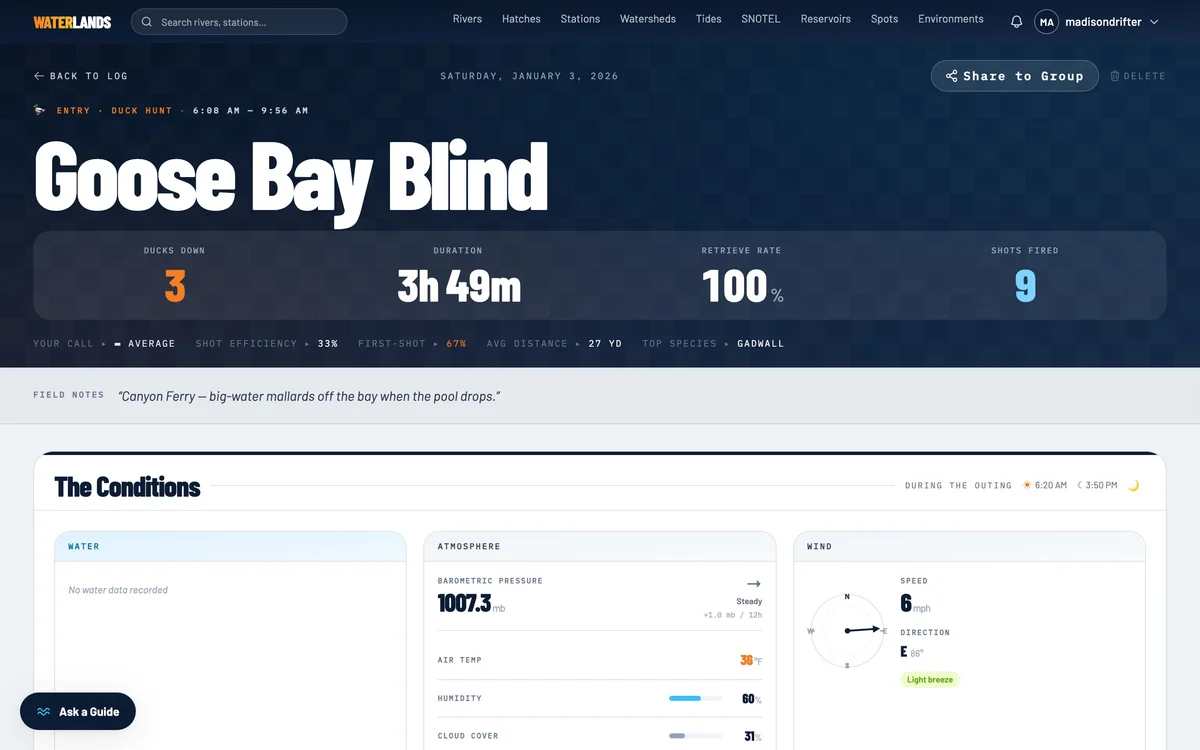
- Step 6 · After you go
Step 6 of 9. File a Debrief
The Debrief grades the call — what the Read expected against how the morning actually went, and where it ranked against the rest of your season.
Over a season this is what separates "the birds are in" from knowing which conditions have historically put them over your spread.
→NextEnough of these and your mornings carry a signature.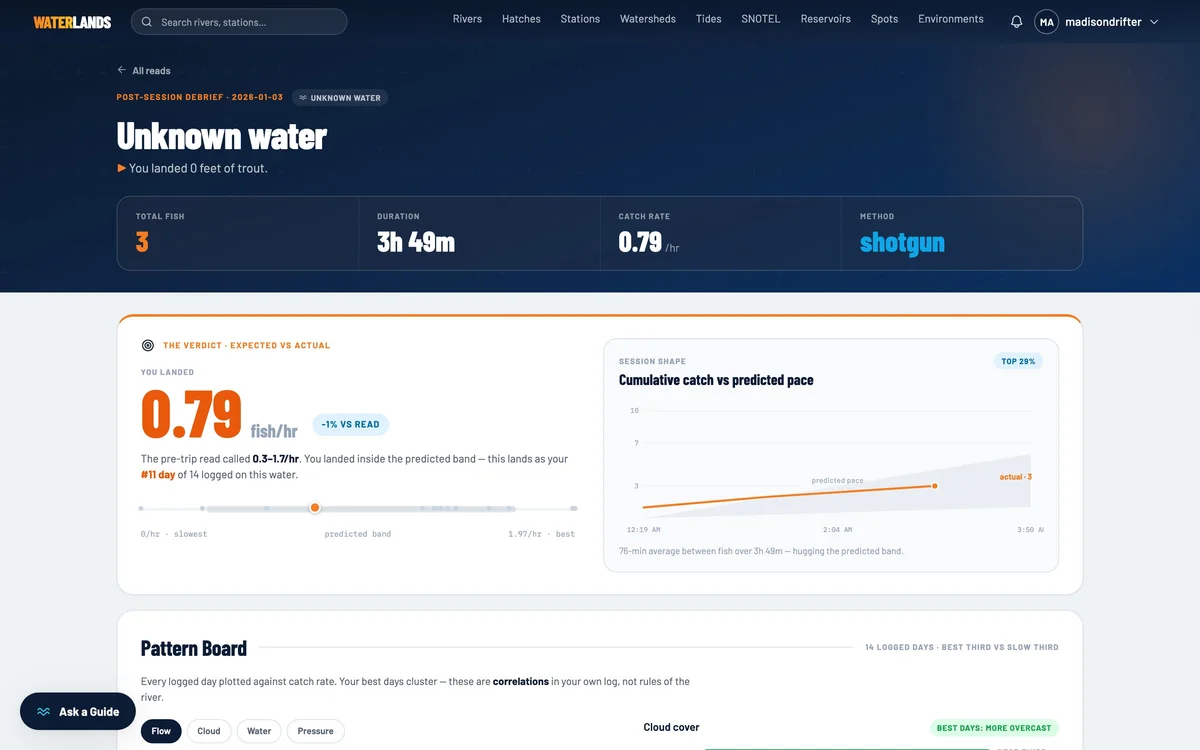
- Step 7 · The payoff
Step 7 of 9. Saturday is a 74
Your mornings carry a Flight Code — 0 to 100 by hole, with the signature behind your good shoots.
For most waterfowlers it comes out as some version of the same thing: a hard overnight temperature drop, wind that holds in the band, water falling. But it is your version, measured on your holes, and it will tell you when the folklore does not hold.
→NextA score you trust is worth building a board around.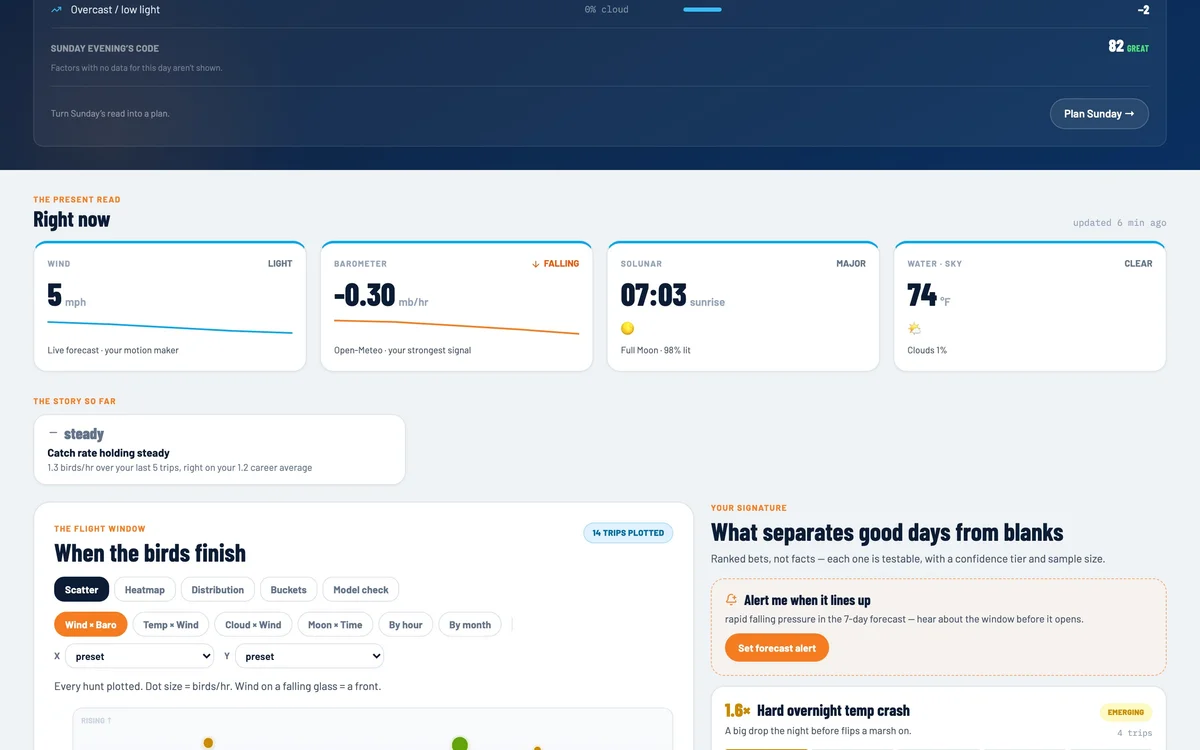
- 1Overnight temperature drop — usually the strongest factor
- Step 8 · The aggregation
Step 8 of 9. A board built for ducks
This is the payoff. An Environment pulls every blind, every pool, the local weather, and a northern front-watch point into one screen.
Pick blinds by wind and rest history. Ladder the flyway. Watch the freeze line march south toward you. Every other object in Waterlands is a part; this is the machine you build out of them.
Blind PickerDrawdown WatchFlyway LadderFreeze-Up WatchRest RotationSeverity Index→NextA board is what your alerts watch.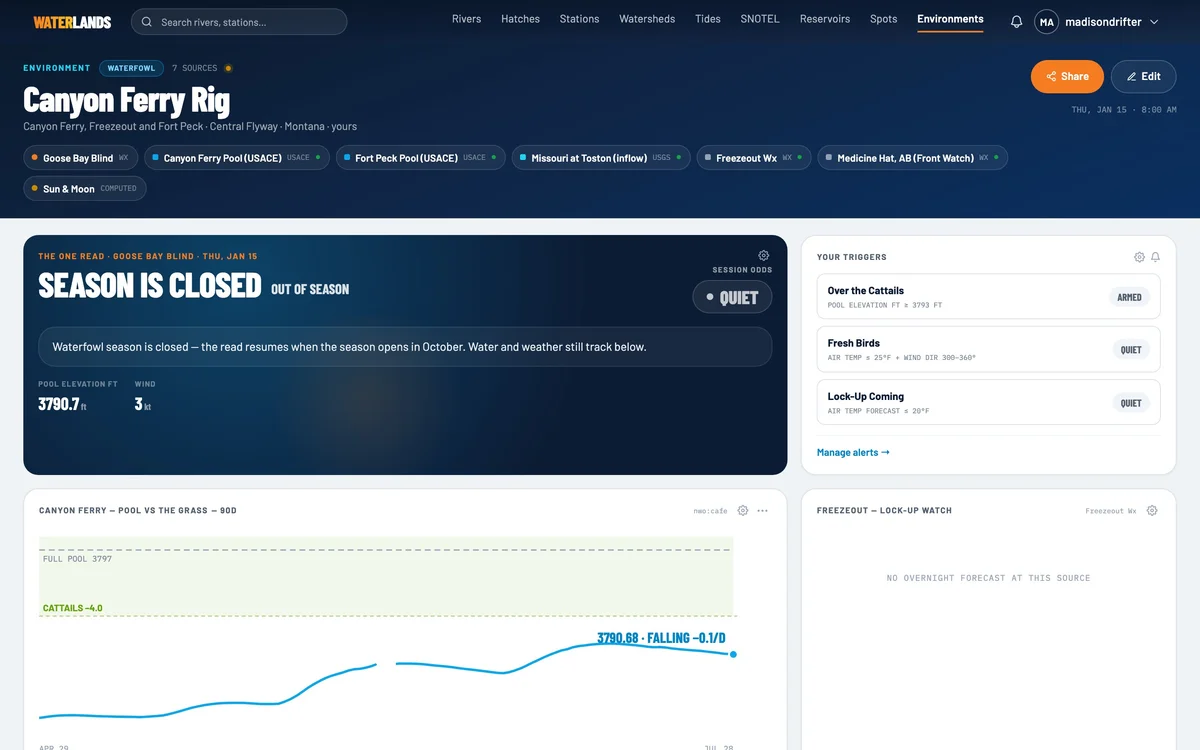
- Step 9 · The trigger
Step 9 of 9. The lake calls the hunt
"Tell me when the lake drops two feet in forty-eight hours." Compound alerts across pool level, freeze-up, severity, and front timing.
So you are in the blind the morning it turns, instead of hearing about it Monday.
Season over seasonAlso in the bag
Compound alerts on level, freeze and fronts. Observations for bird counts. Groups to send the morning read to your hunters.
For leases and guides
Every blind decision, backed by the lake’s own numbers
Lease managers and guides run rotation, water and pressure by feel. Waterlands puts data under it.
Rest rotation on the record
Which holes rested, which got shot, and what the birds did about it.
Water you can defend
Pool elevation against top of conservation, across every pool on the lease.
One link to your hunters
Send the morning’s read to the group before headlights hit the ramp.