Learning Center
How Waterlands actually works.
Three walkthroughs, nine steps each, following the same loop in three idioms: drop a spot, watch the water, take a Read, log the trip, file the Debrief, read your Code, build the Environment. Real screens, real data, no account required.
USGS · USACE · NOAA · SNOTEL · USDA NASS · U.S. Drought Monitor
Pick your season.
Same loop, three idioms. Start anywhere. Each walkthrough stands on its own, and every step is a link you can send to someone.
Fishing
Your water, scored
Fishing
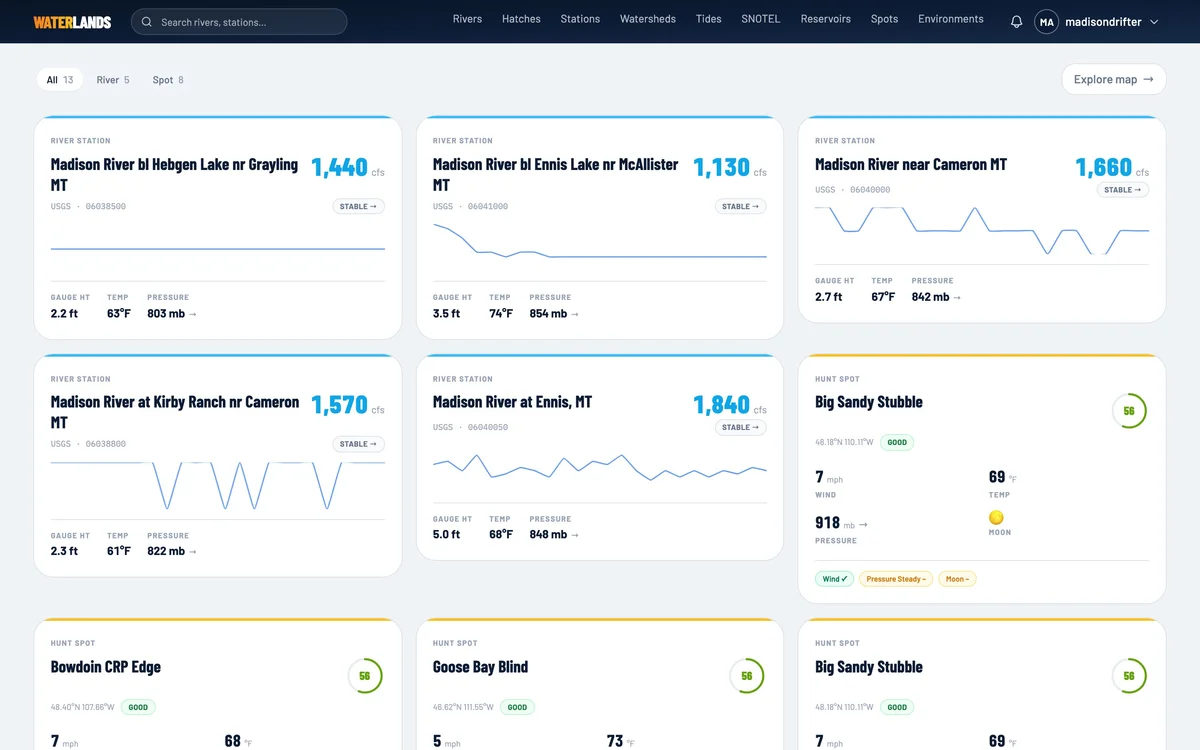
Waterlands scores your water 0–100 from your own logged trips — not a generic almanac. Nine steps from first spot to alerts that fire when it lines up.
9 steps
Duck Hunting
The lake tells you first
Duck Hunting
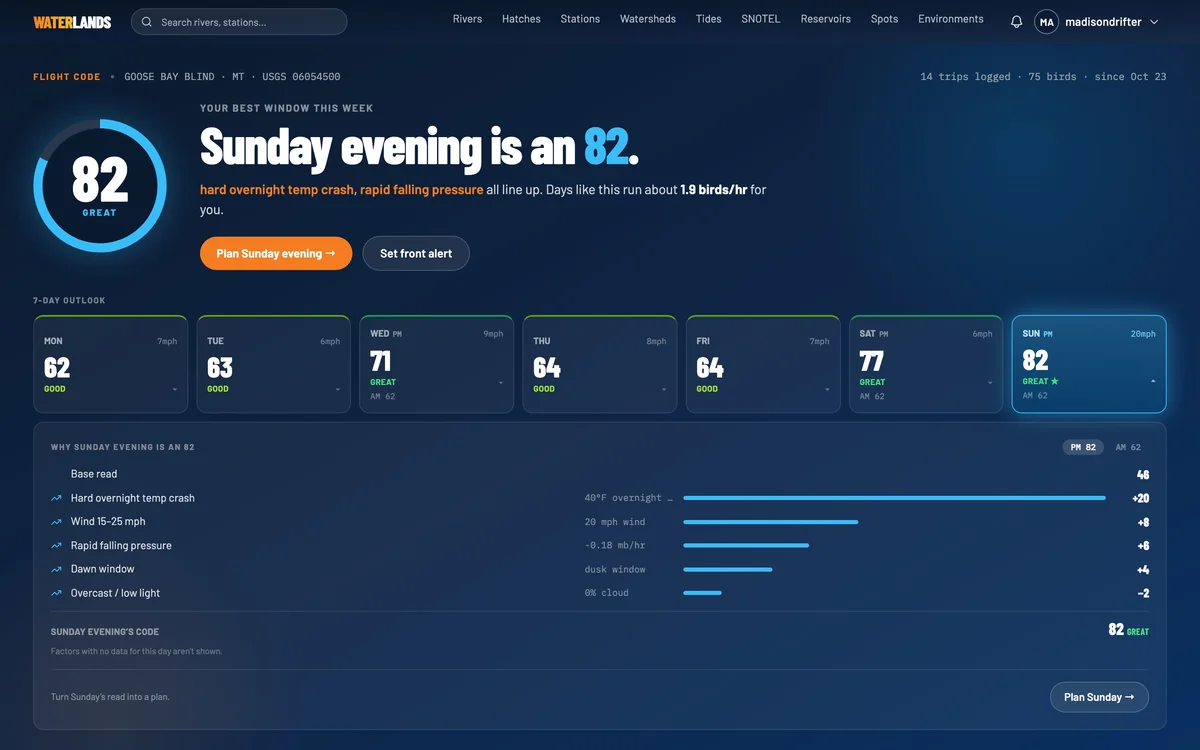
Waterlands watches drawdown, freeze-up, cold fronts and flyway timing over your water, then scores your mornings from the hunts you log.
9 steps
Upland Bird Hunting
Hunt where the birds moved
Upland Bird Hunting
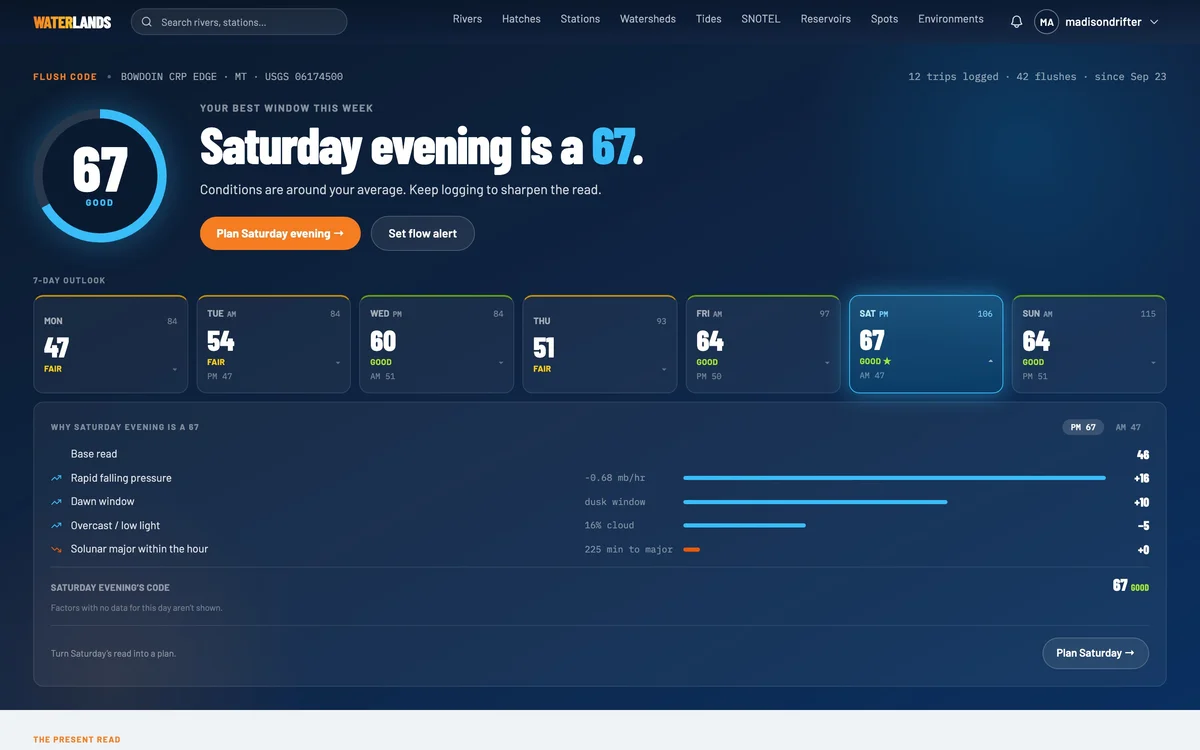
Crop progress and harvest as habitat signal. Scenting conditions for the nose. Snow pushes for late season. Waterlands reads the ground the way you do.
9 steps
How-to guides.
One job each. Build a board for your water, log what happens on it. Shorter than the walkthroughs, and every step is a real screen.
Fishing
Build a Permit Flats Environment
Tide, wind, water temp and light for your flat, assembled once from real instruments. Built on the web app in about ten minutes.
7 steps
Fishing
Build a Bass Environment
Pool against the bushes, storage against normal, the thermocline model and your practice notes — one board, built once on the web app.
6 steps
Duck Hunting
Build a Duck Hunting Environment
Drawdown, freeze-up and the front that moves birds — watched over your exact water, on one board you check with coffee.
6 steps
Upland Bird Hunting
Build a Pheasant Environment
Upland has no gauge, so the board reads the ground instead — crops, drought, scent, safe hours for the dog, and every covey you have moved.
6 steps
How it works
Logging Every Kind of Day
Float, wade, lake, salt, ducks, upland, whitewater — one logging loop for all seven, from the phone or a Garmin watch, with conditions recorded for you.
6 steps
How it works
Observations, End to End
Not just ducks, fish and birds: any sighting, tagged your way, with the conditions stapled on automatically — and a chart per tag on the other end.
6 steps
Start with the app itself.
Where everything lives, and what the invented words mean. Neither one assumes you have logged anything yet.
How it works
Five doors
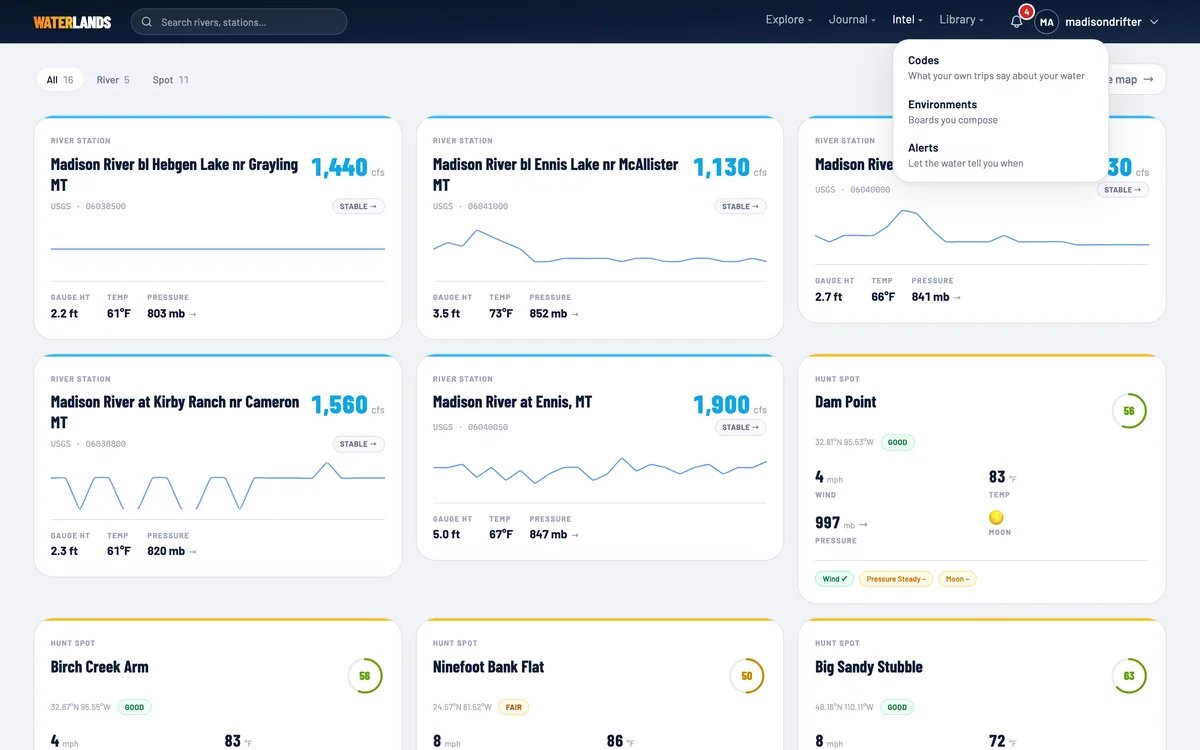
The Lay of the Land
The whole app is five doors. One sentence each, one screen each, about thirty seconds. Read it once and you will never hunt for anything again.
5 steps
How it works
Eight words
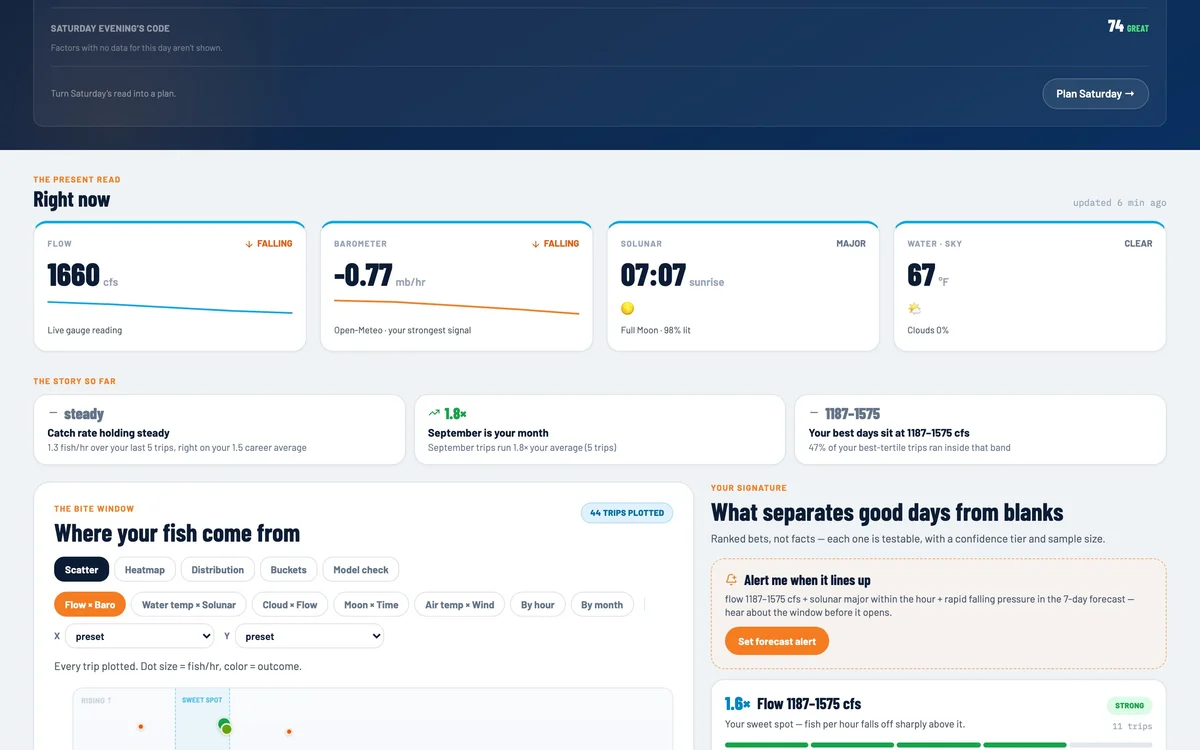
The Glossary
Waterlands makes up eight nouns and then puts them on screen in capitals as if you already knew them. Here is each one, in a line, with a link to where it actually appears.
8 steps
True of all three
One engine, three seasons.
Scored from your own log
Not a regional average. The number comes from trips you logged, on water and ground you named, in conditions recorded while you were standing in them.
0–100, every point attributed
Every source is named
USGS gauges, USACE pool elevations, NOAA forecasts, SNOTEL snowpack, USDA crop progress, the U.S. Drought Monitor. Nothing on screen without a provider behind it.
No number without a source
Private unless you say otherwise
Spots, sessions and observations are yours. Sharing is per-session and off by default, and leaderboard participation is one tap to leave.
Opt in, not opt out